

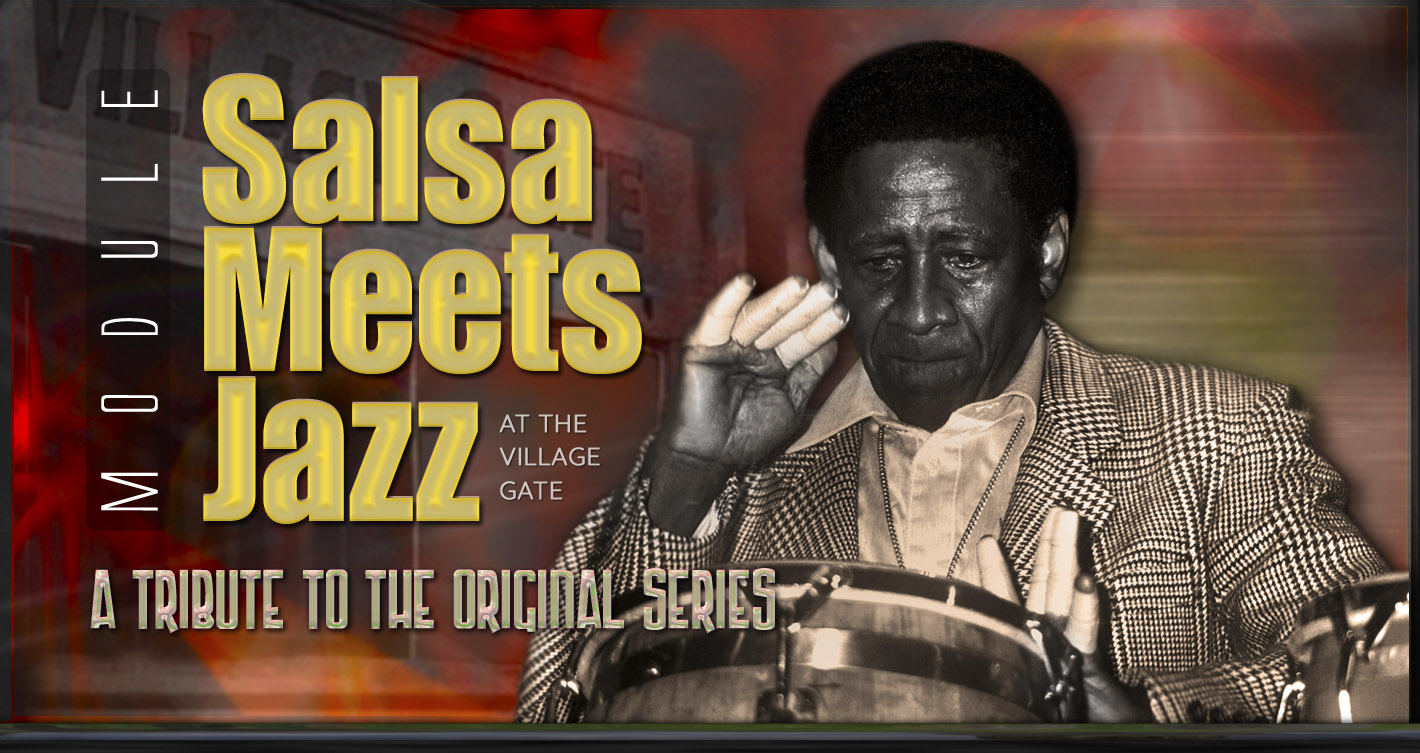

Retracing the official birth of "Salsa Meets Jazz at the Village Gate" proved to be an interesting endeavor. First, to get a better idea of how a few good answers can invite even more questions, I would suggest reading the research document contributed to this module by Dr. José E. Cruz.
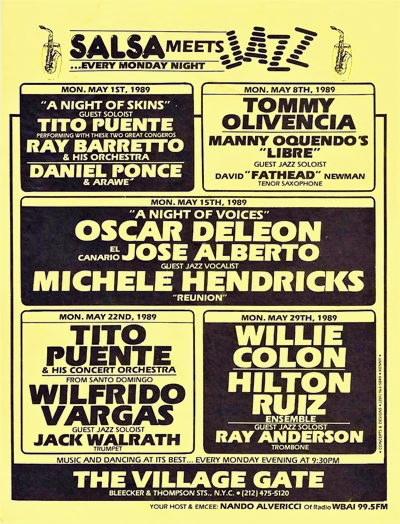
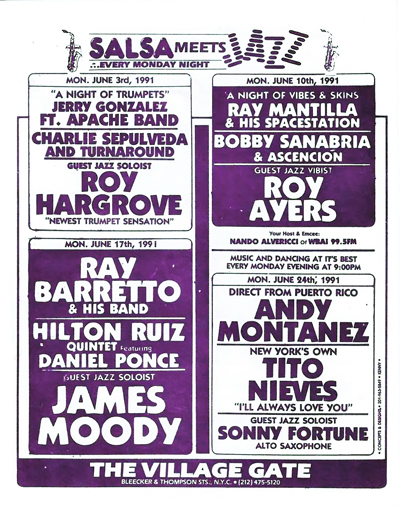
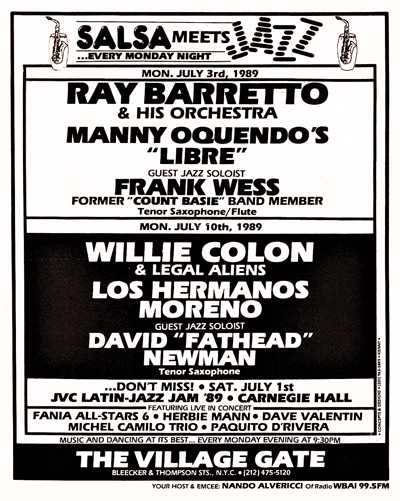
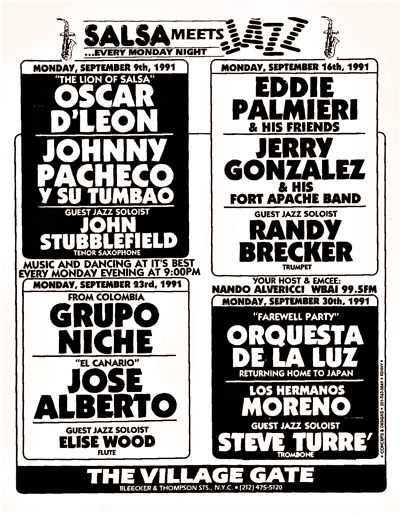
The truth is that "Salsa Meets Jazz at the Village Gate," as a promotional concept, had run its course. What continued to endured were the indelible brush strokes of events which tell the story of how New York City driven afro-cuban rhythms came to co-exist under one harmonious roof with improvisational jazz. Make no mistake, the pioneers like Mario Bauzá, Machito, Dizzy Gillespie, and Mongo Santamaria were already out there doing it 'Big Band' style. But what was unraveled at New York's Village Gate was a unique, and artistic musical genre, during the chaos of the American 60s, that has since taken on an impeccable identity of its own: Latin Jazz.
When history speaks of Village Gate musical collaborations as being seminal events, it can only point to one person as its key protagonist -- Art D'Lugoff. In the 1950s after returning from World War II service in China, Art D’Lugoff came into possession of the Mills House No. 1 structure -- then a documented flophouse for transient men on Bleecker and Thompson Streets in New York City. He had already acquired a reputation, in the area known as Greenwich Village, as a "savvy entrepreneur with a flair for promoting." After some remodeling, D'Lugoff opened the doors to The Village Gate in 1958. The Village Gate rode the wave of Folk music, presenting the most prominent voices of the era like Pete Seeger and Bob Dylan who, according to one account, wrote his famous song 'A Hard Rain’s A-Gonna Fall' in the basement there. Music club-goers, eventually, acquired a taste for Jazz and the Village Gate was there to meet the demand. The nightspot showcased an impressive line-up of jazz artists, and nearly thirty seminal live recordings were made there in the ‘60s and ‘70s. Some of the Giants of Jazz that played The Gate included Louis Armstrong, Miles Davis, Dizzy Gillespie, John Coltrane, Nina Simone, Coleman Hawkins, Billie Holiday, Duke Ellington, and Count Basie. “(The Gate) was used for many things, for gatherings of all sorts, debates, discussions,” D’Lugoff was quoted in a 2005 article by writer Aileen Torres. “It was not a one-type of place... We were able to function on many levels. As it went on, in the sixties, it got more and more involved in jazz. We pretty much were one of the most important jazz clubs in the world.”
In the early ‘60s, afro-cuban rhythms were driving a free-spirited segment of society. Famed disc jockey 'Symphony Sid' Torin and music entrepreneur Jack Hooke teamed up with D'Lugoff and The Village Gate. Gate goers had already gotten a little taste of afro-cuban-infused jazz with the appearances and live recordings of flutist Herbie Mann. But, according to researcher Dr. José E. Cruz, "it is not until Mongo Santamaría’s appearance in 1963 that the model for the series acquires its definitive musical shape." Santamaria's live-recording 'Mongo at the Village Gate (Riverside Records, 1963)' gave evidence to the effect that afro-cuban rhythms and improvisational jazz could survive in grand fashion within the same time and space. At the vanguard of the NYC descarga movement were the Alegre All-Stars — under the musical directorship of the talented and innovative pianist Charlie Palmieri. The Alegre record label owned by producer Al Santiago became a sponsor of the 'Monday Nights at the Gate' nightspot series. That coupling led to several Alegre All-Stars live-recordings.
Eventually, as calls from jazz musicians eager to play with these great Latin musicians started to pour in,” Torin and Hooke broaden the series scope by including more non-Latino musicians. The increased integration of both musical genres widened an important venue for the next flavor of Latin music: Salsa. In the late 70s, the series was officially coined “Salsa Meets Jazz at The Village Gate”. Many who remember the era say it was promoter Jack Hooke who came up with the updated name. However, other research shows that the next permutation of 'Monday Nights at the Village Gate' was conceived by WRVR-FM DJ Roger Dawson who also hosted some of the shows at the Gate. The series, for reasons that elude researchers, laid dormant for nearly a decade (1970-1980). Dawson, at the time, was the host of a very popular radio program 'Sunday Salsa Show' (1976-1979). He could have very well been the catalyst for the series' return.
To many of the Latin and Jazz musicians who had performed throughout the series span, the Village Gate event became a proving ground, a place where their respective technical and creative abilities were always put to task before tough New York audiences.
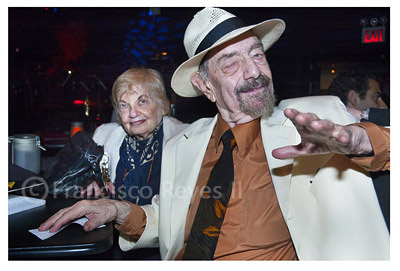
Over a period of 30 years, Latin/Salsa Meets Jazz at The Village Gate was the pre-eminent series in New York City and probably in the United States that celebrated their romance. In 1993, the series came to an abrupt end, sadly, as the Village Gate closed its doors forever. According to one source, “the club closed for reasons related to its lease.” I got to meet Art D'Lugoff and his wife at the (le) Poisson Rouge premier of "Salsa Meets Jazz" in late 2008, through an introduction by percussionist, band leader Bobby Sanabria. A big smile came to his face when Bobby told him that I was responsible for building the web module celebrating this NYC music legacy. D'Lugoff expressed to me how much he enjoyed seeing what was done on-line and invited me to all the shows. In 2010, Art D'Lugoff passed away at the age of 85. So in his memory, the "Salsa Meets Jazz At The Village Gate" module dedicates itself to the spirit of the original series and to all the memorable musicians who brought their very best to the Village Gate stage. - Francisco Molina Reyes II (Revised 11/03/2021) Further Reading:SOURCES: |
||
 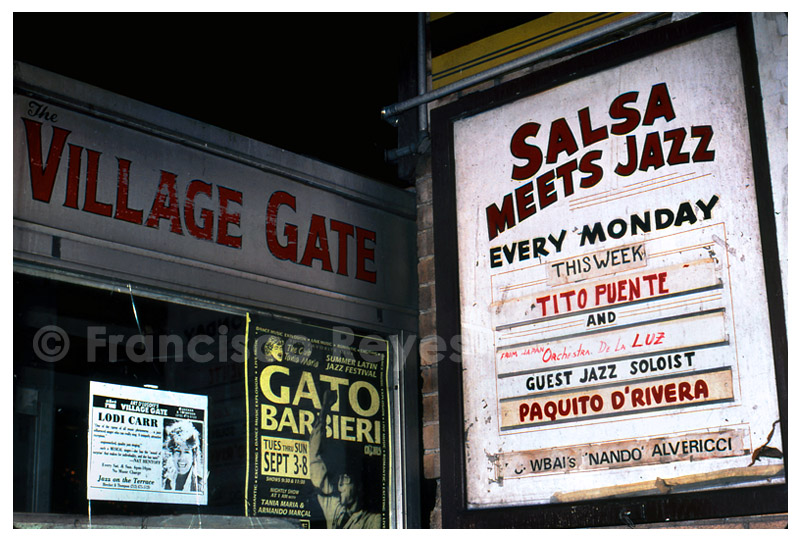
"Salsa Meets Jazz" marquee - 1991, Village Gate, NYC
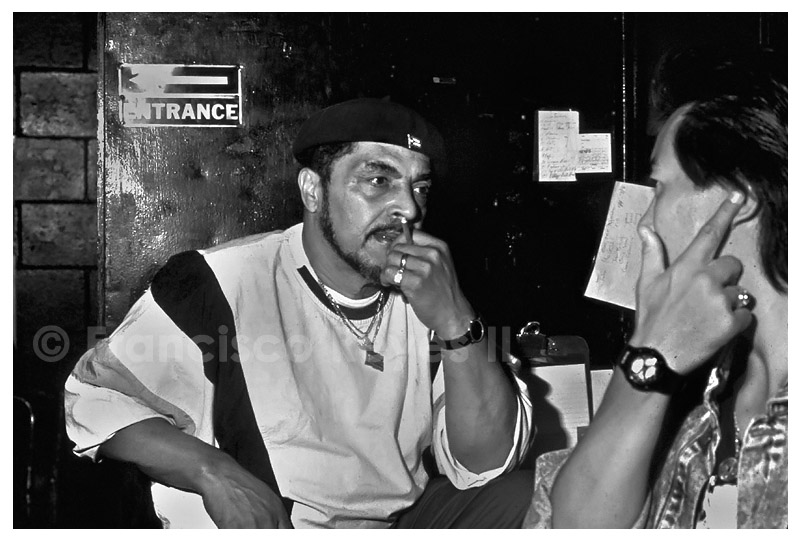
"Tuffy," the gate-keeper - 1991, Village Gate, NYC
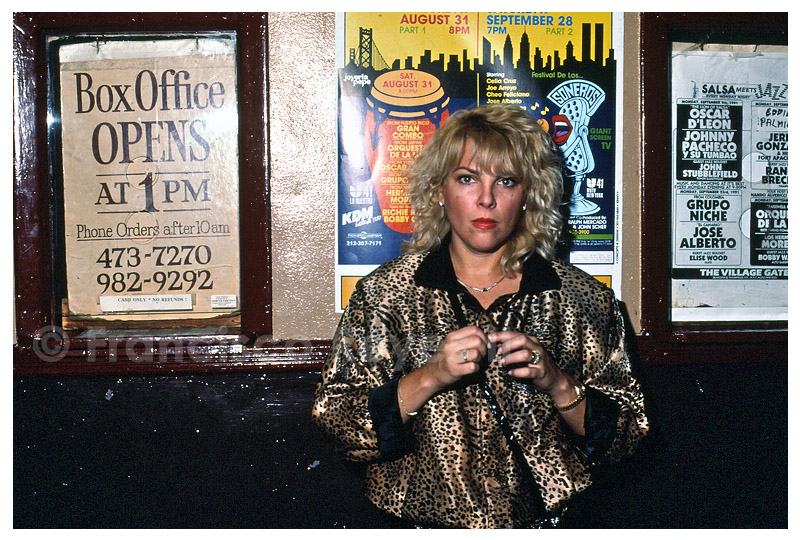
Woman waiting by box office - 1991, Village Gate, NYC
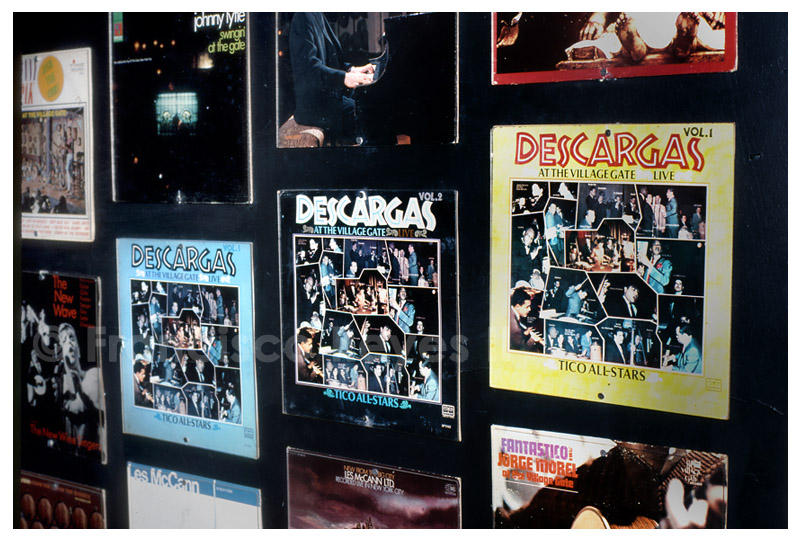
"DESCARGAS" AT THE VILLAGE GATE (original vinyl album covers fixed to the "..Through The Years" wall - 1991, NYC)
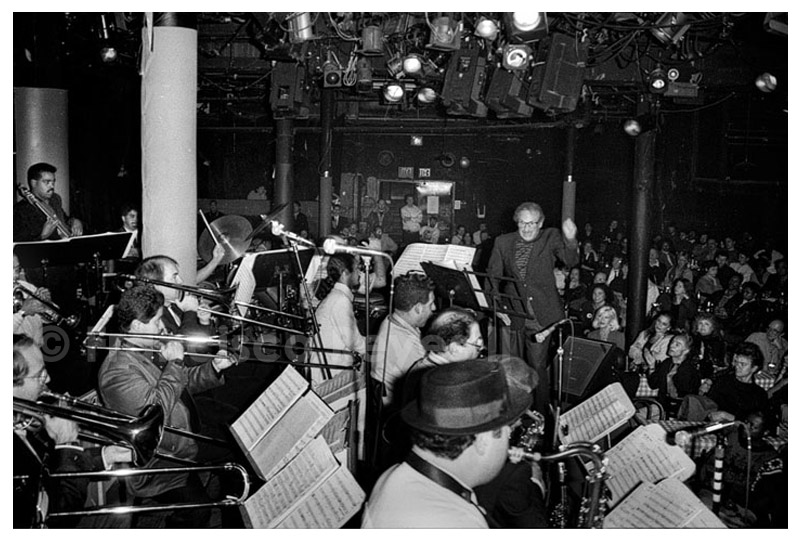
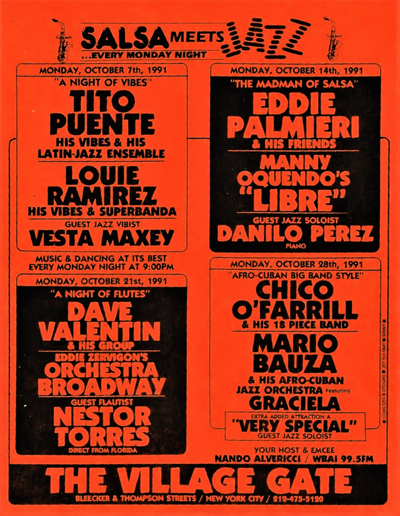
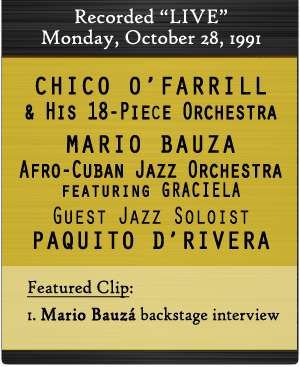
Maestro Chico O'Farrill conducting his 18-piece band - "Afro-Cuban Big Band Style" October 28, 1991, Village Gate, NYC
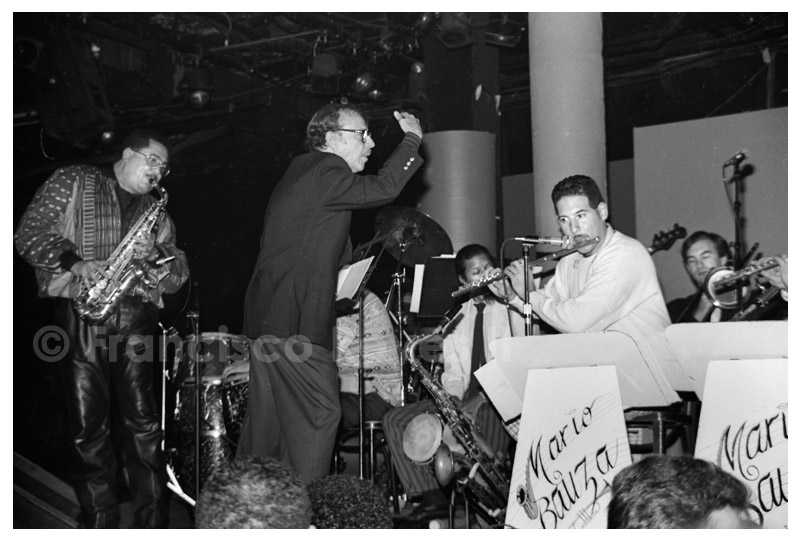
Paquito D'Rivera (left) on alto sax and Chico O'Farrill conducting, Steve Frohman (right) on flute - 1991, Village Gate, NYC
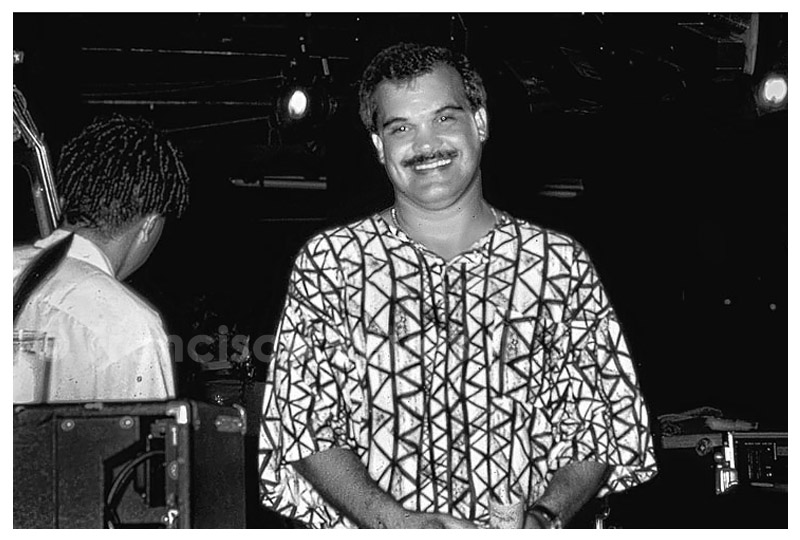
"Salsa Meets Jazz" MC, WBAI-FM radio host 'Nando' Albericci - 1991, Village Gate, NYC
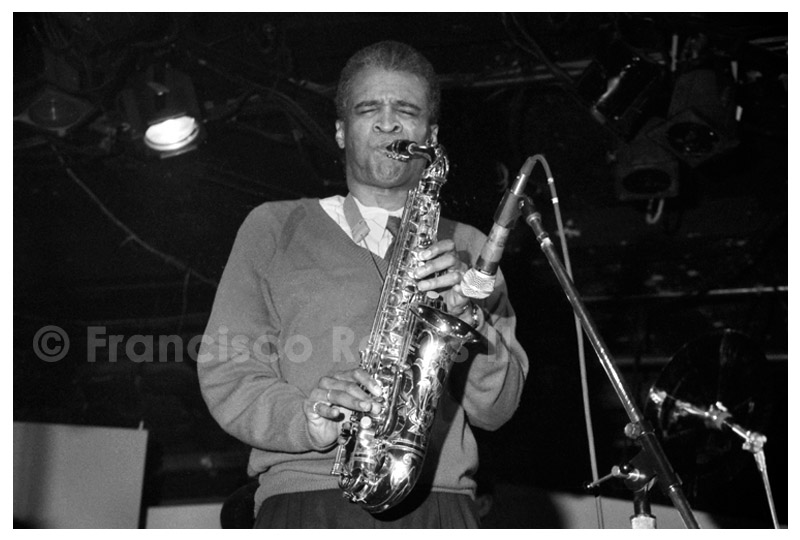
Bobby Watson on alto sax, guest soloist with Orquesta de la Luz - September 1991, Village Gate, NYC
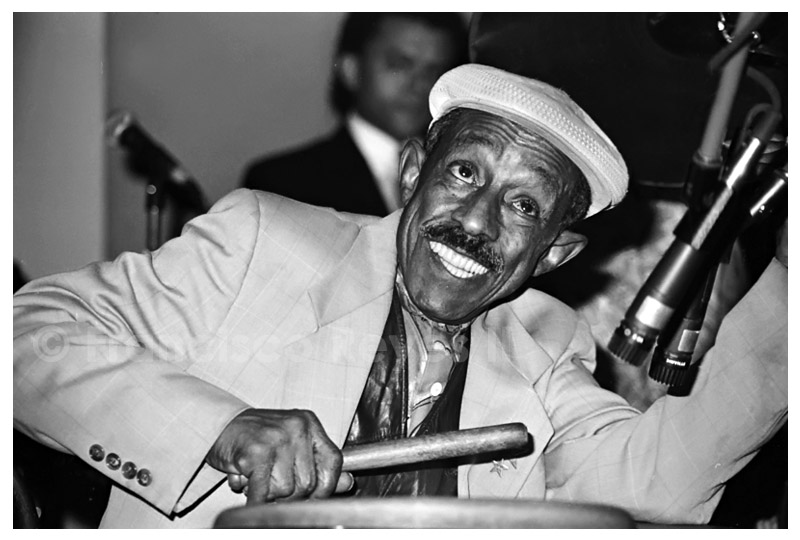
Carlos "Patato" Valdes on congas - November 11, 1991, Village Gate, NYC
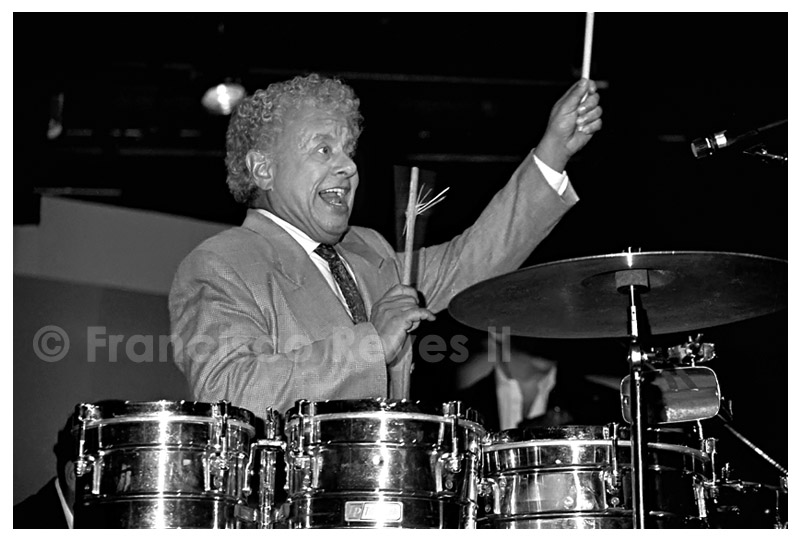
Tito Puente on timbales breaks a stick with His Latin Jazz Ensemble- 1991, Village Gate, NYC
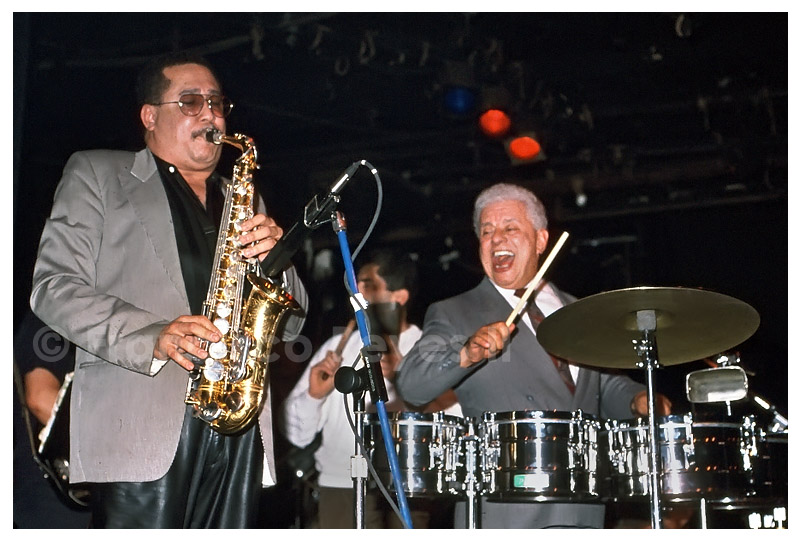
Guest soloist Paquito D'Rivera on alto with Tito Puente & His Latin Jazz Ensemble
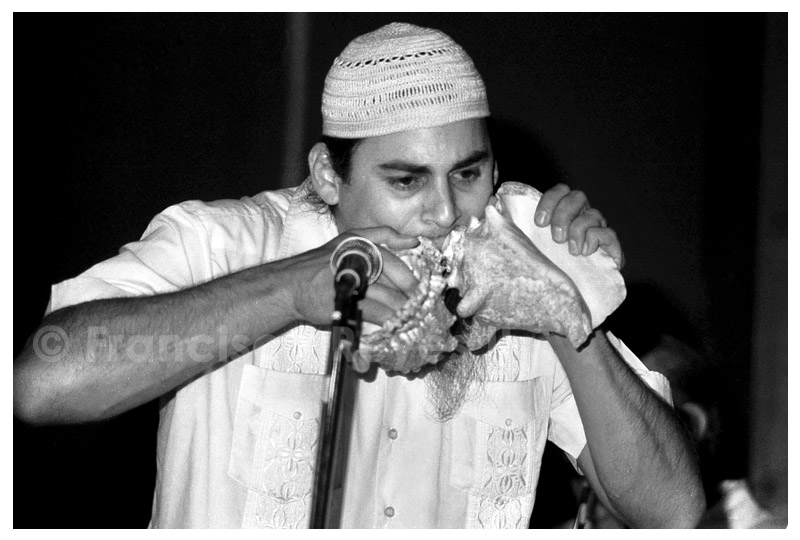
Steve Turre playing conch shells with Conjunto Libre - 1985, Village Gate, NYC
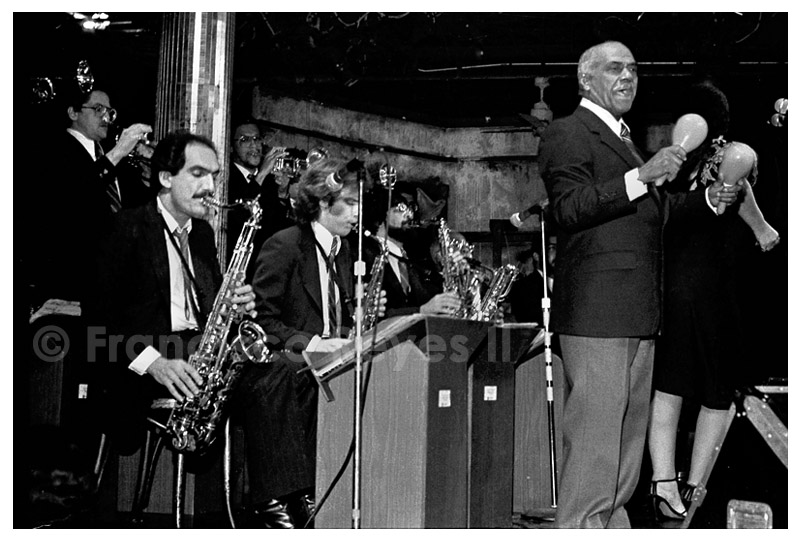
Machito and His Orchestra - circa 1980, Village Gate, NYC
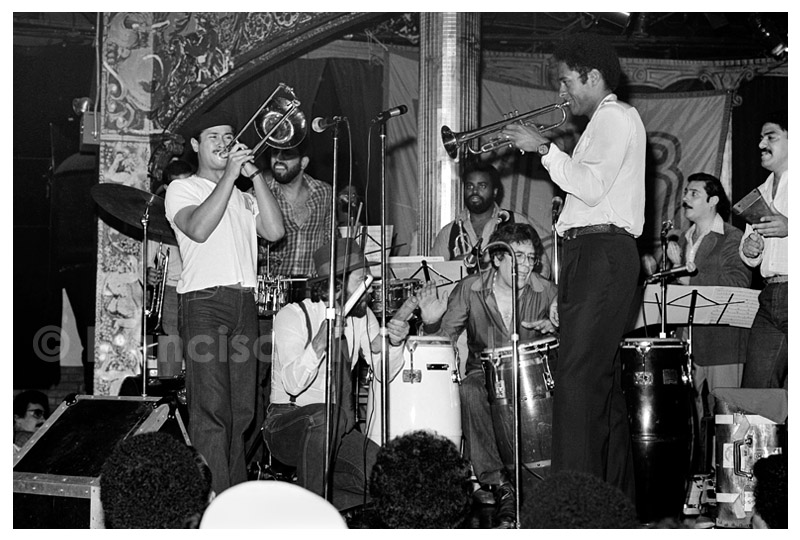
Papo Vázquez on trombone and Jon Faddis on trumpet with Ray Barretto and His Band - 1980, Village Gate, NYC
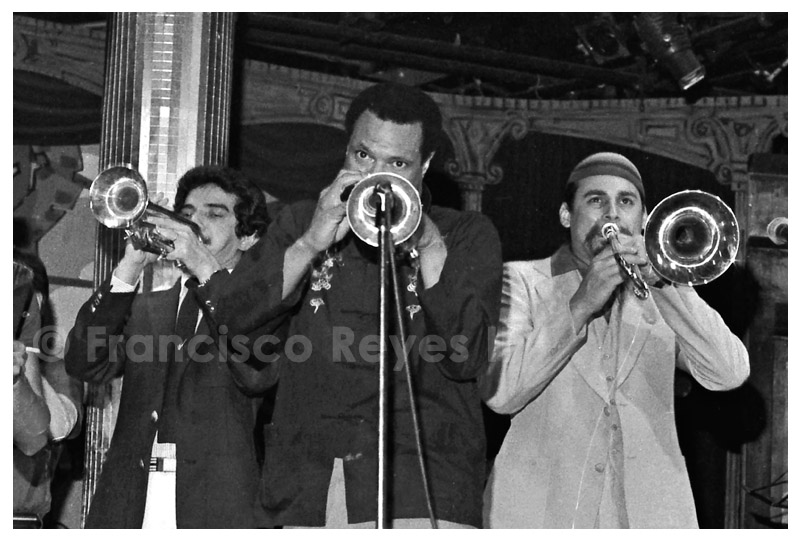
Luis "Perico" Ortiz (left) on trumpet, Woody Shaw (center) on trumpet, and Steve Turre (right) on trombone - 1980, Village Gate, NYC
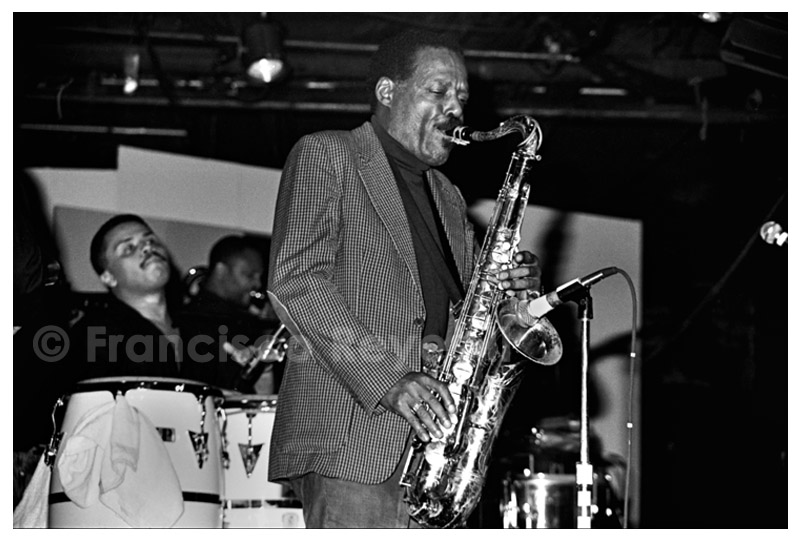
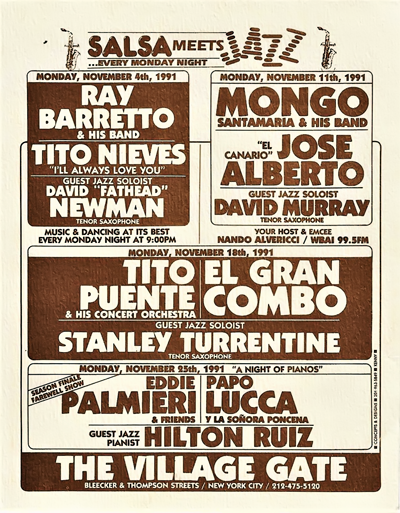
David "Fathead" Newman on tenor sax, guest soloist with the Tito Nieves band - November 4, 1991, Village Gate, NYC
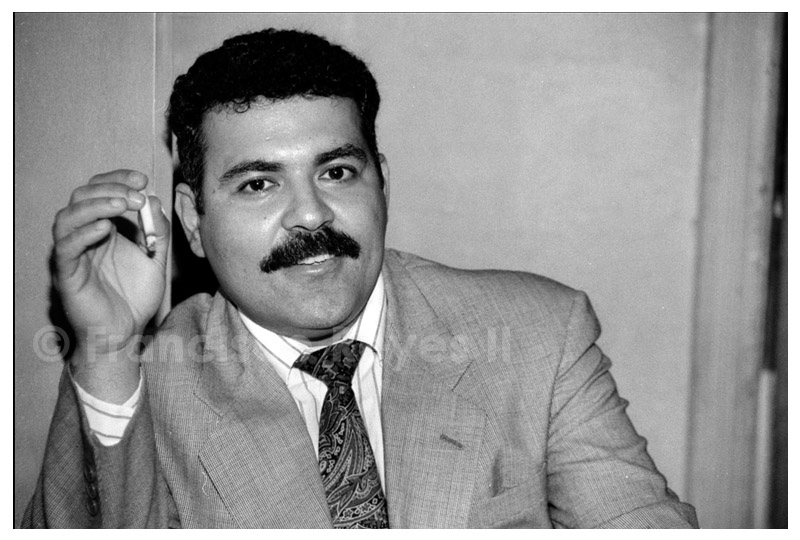
Pianist Hilton Ruiz backstage - November 25, 1991, Village Gate, NYC
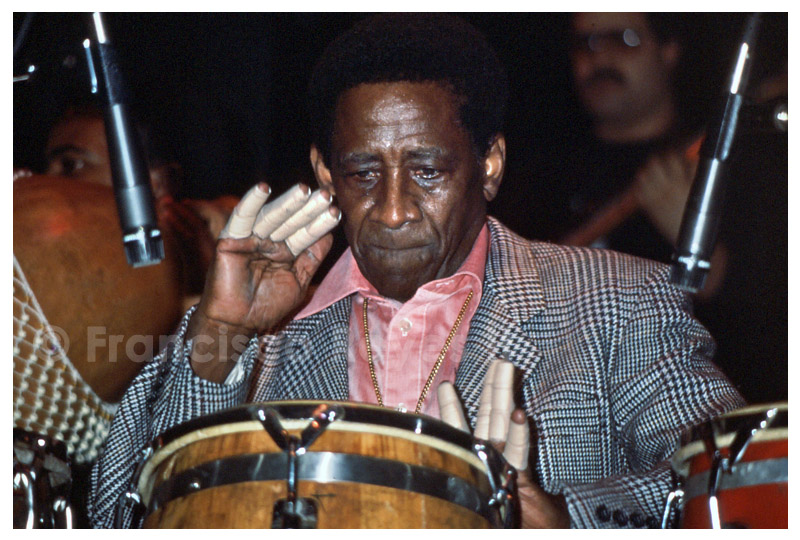 Ramon "Mongo" Santamaria on congas - 1989, Village Gate, NYC
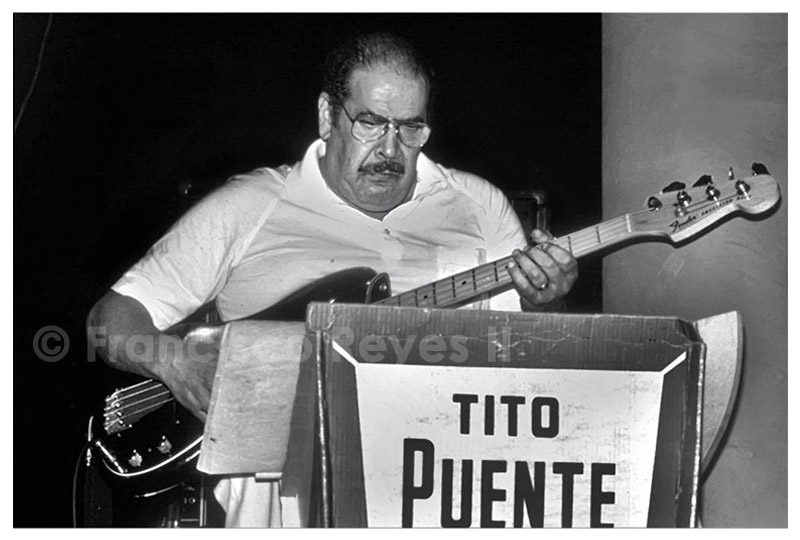
Bobby Rodriguez on bass with the Tito Puente Orchestra, an original member of the Alegre All-Stars - 1991, Village Gate, NYC
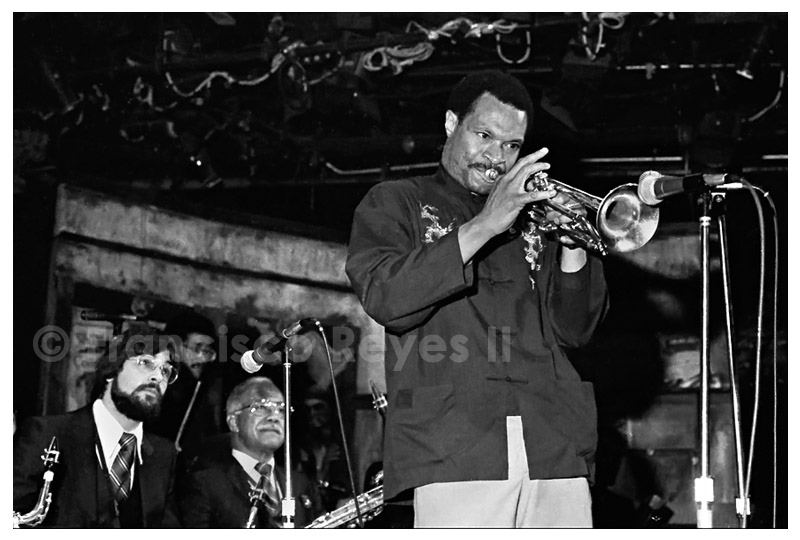
Woody Shaw on trumpet, guest soloist with Machito and His Orchestra - circa 1980, Village Gate, NYC
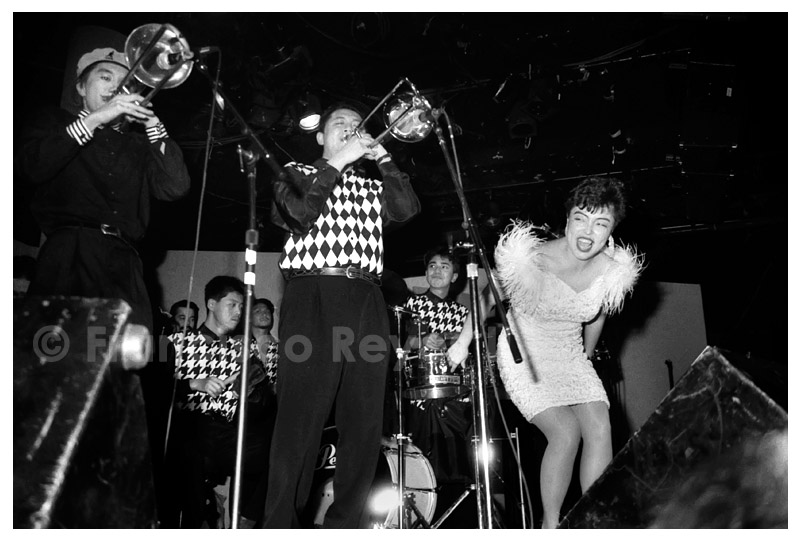
Orquesta De La Luz - "Farewell Party" September 30, 1991, Village Gate, NYC
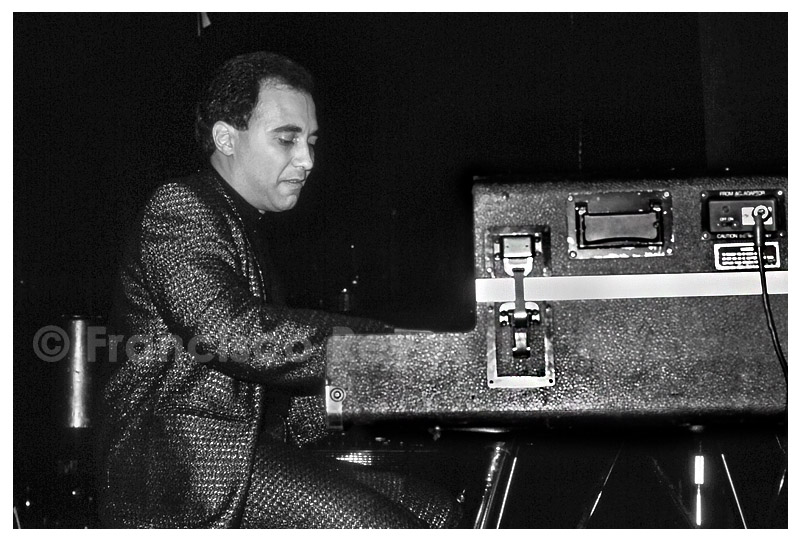
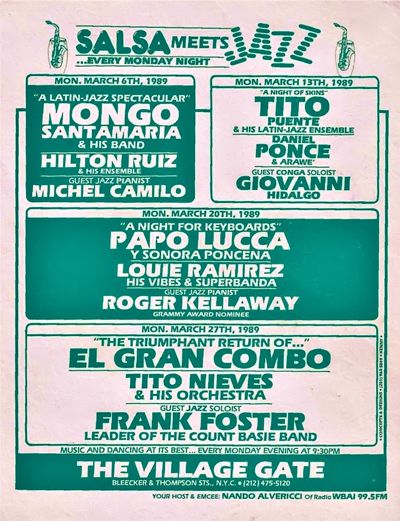
Michel Camilo on piano, guest soloist with Mongo Santamaria and His Band - March 6, 1989, Village Gate, NYC
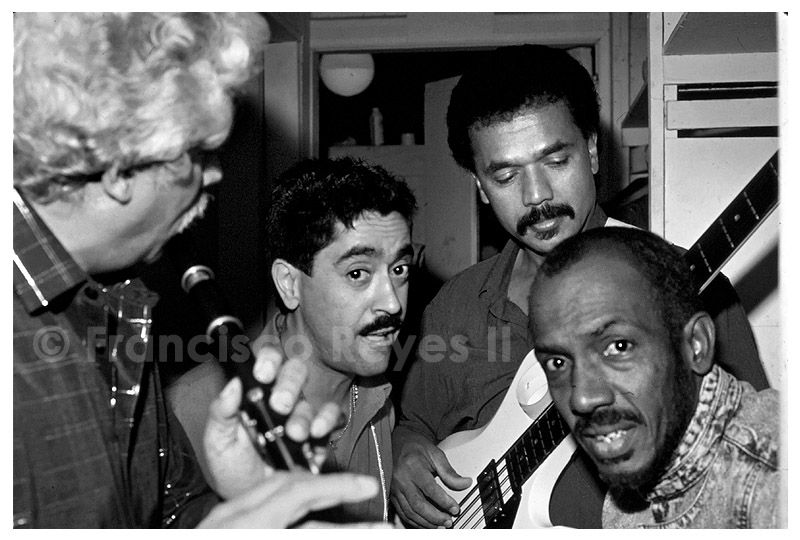
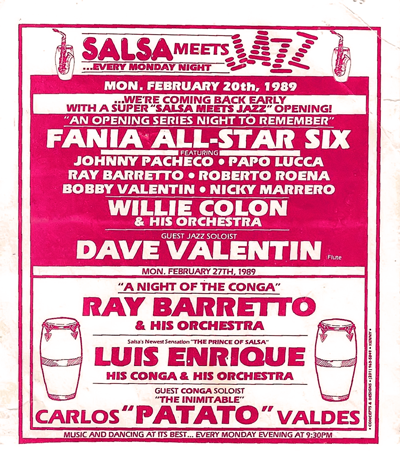
Johnny Pacheco. Nicky Marrero, Bob Valentin and Roberto Roena backstage - Fania All-Star Six "An Opening Night To Remember," February 20, 1989, Village Gate, NYC
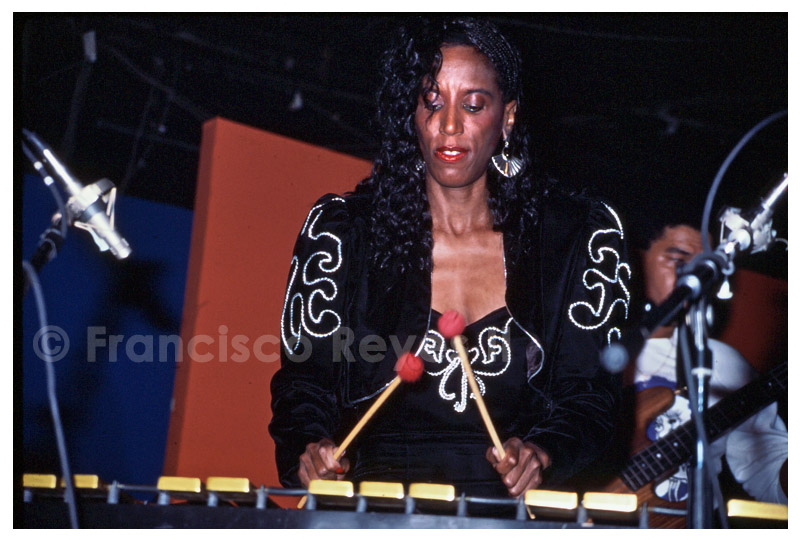
Vesta Maxey on vibes, guest soloist with Tito Puente and His Latin-Jazz Ensemble - "A Night of Vibes" Oct. 7, 1991, Village Gate, NYC
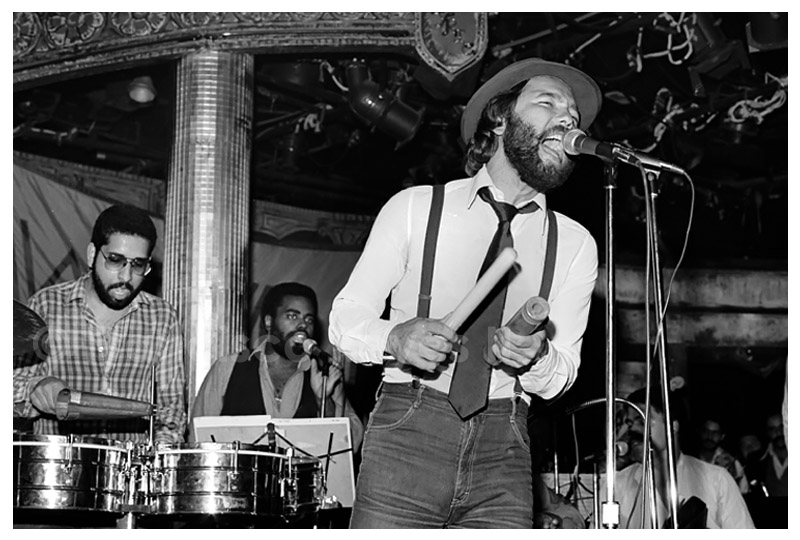
Singer Ruben Blades with Ray Barretto and His Band - July 1980, Village Gate, NYC
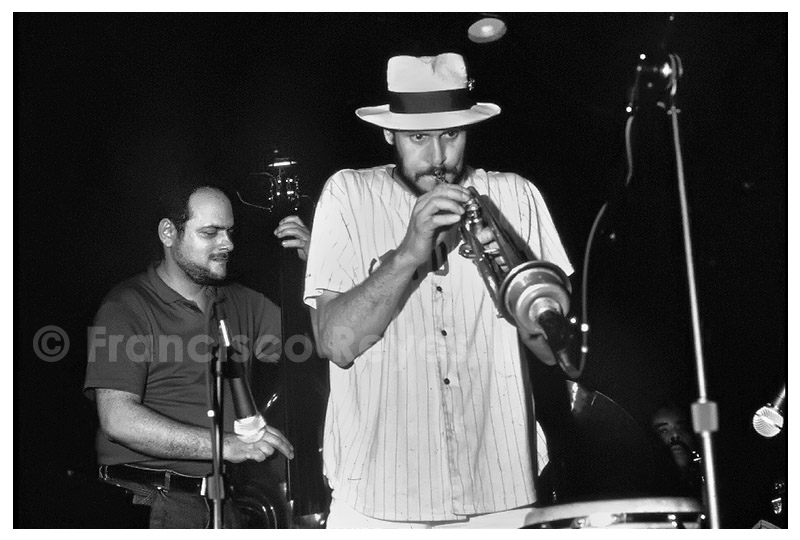
Andy Gonzalez (left) on bass and Jerry Gonzalez on trumpet with Fort Apache Band - September 16, 1991, Village Gate, NYC
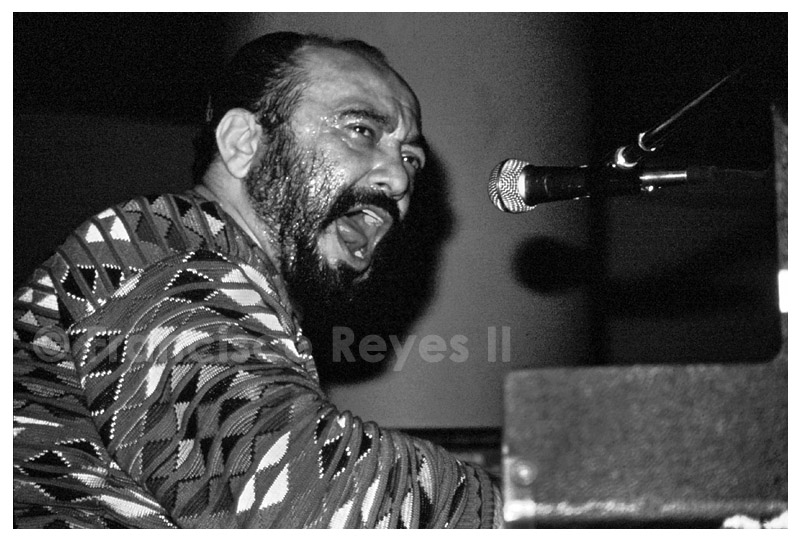
Eddie Palmieri on piano - September 16, 1991, Village Gate, NYC
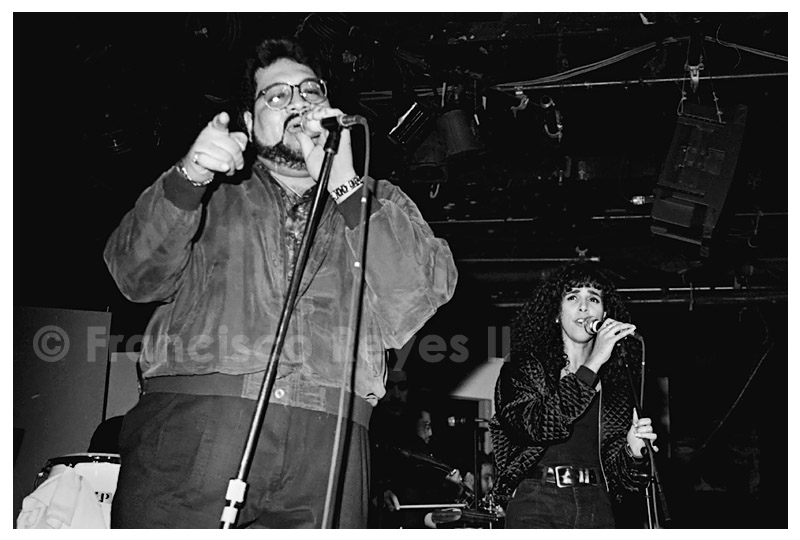
Singer Tito Nieves with Alexandra - November 11, 1991, Village Gate, NYC
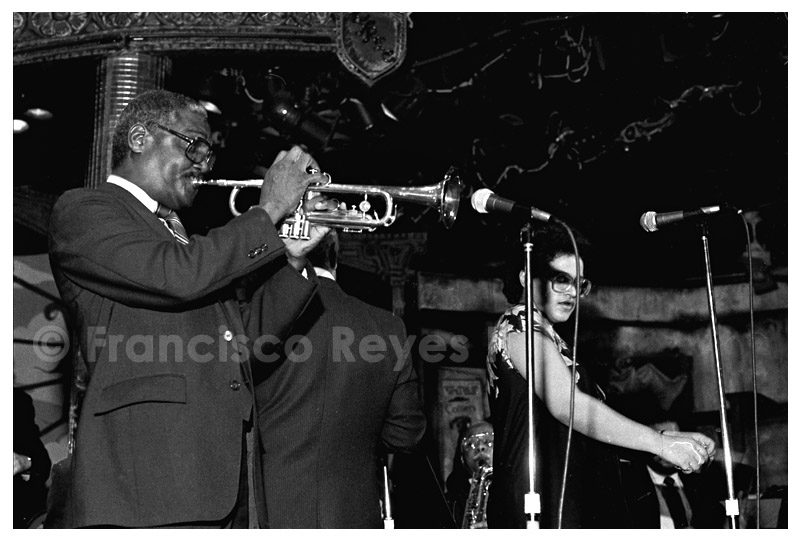
Alfredo "Chocolate" Armenteros on trumpet with the Machito Orchestra - circa 1980, Village Gate, NYC
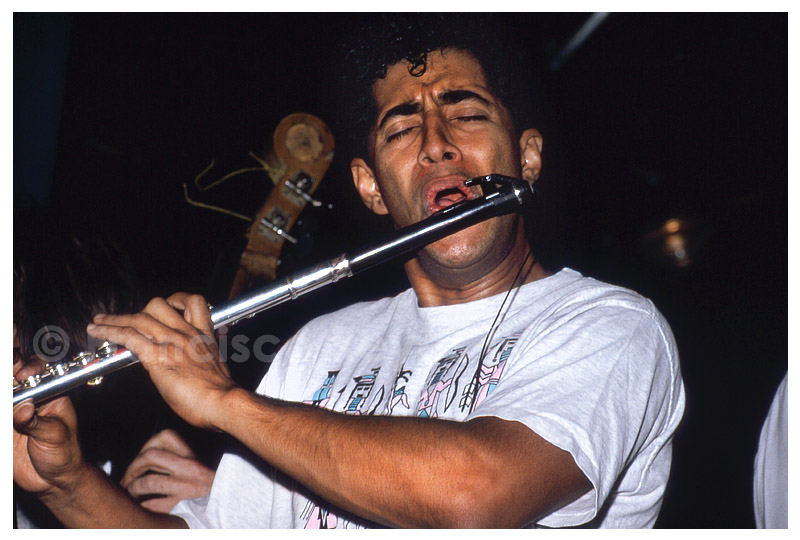
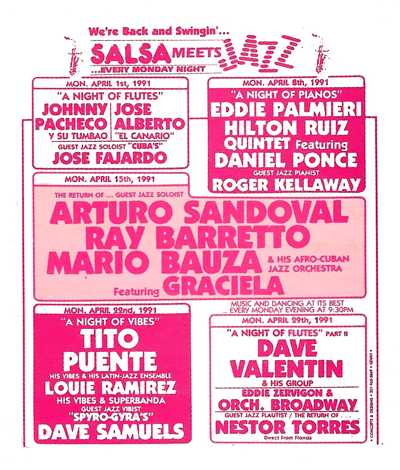
Nestor Torres on metal flute, guest soloist with Orquesta Broadway - "A Night of Flutes" April 29, 1991, Village Gate, NYC
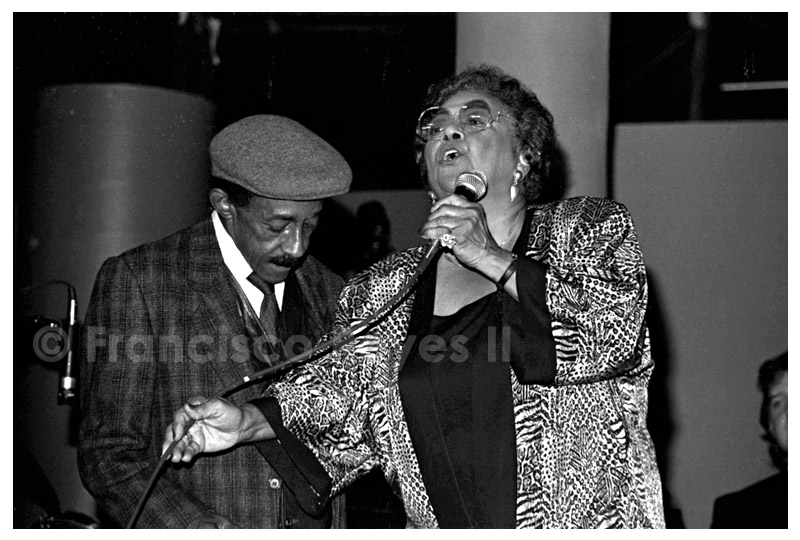
Graciela (assisted by "Patato" Valdes) singing with Mario Bauza and His Afro-Cuban Jazz Orchestra - "Afro-Cuban Big Band Style" October 28, 1991, Village Gate, NYC
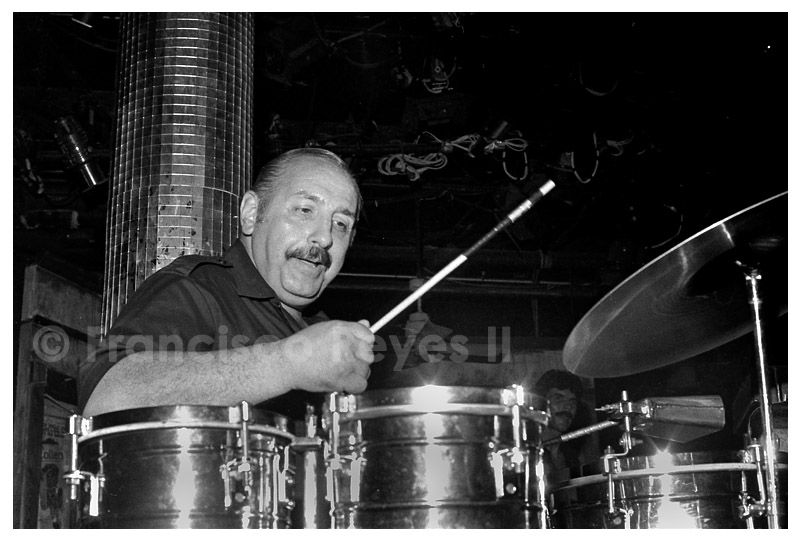
Manny Oquendo on timbales with Conjunto Libre - 1985, Village Gate, NYC
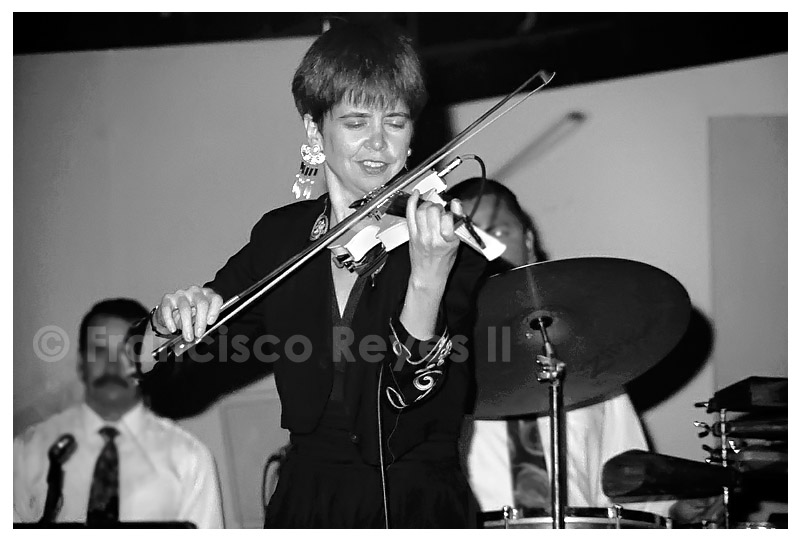
Susan Hansen on violin with and Tito Nieves & His Band - November 11, 1991, Village Gate, NYC
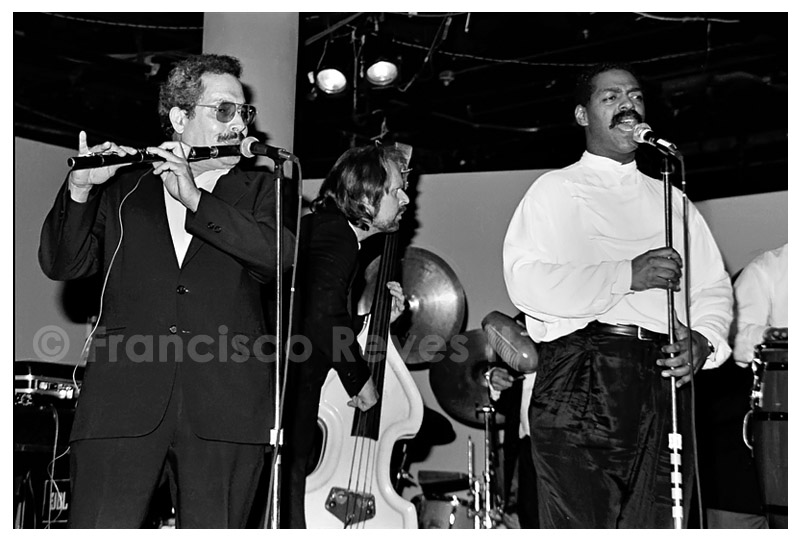
Eddie Zervigon on flute, and Ronnie Baró, singer, Orquesta Broadway - "A Night of Flutes" October 21, 1991, Village Gate, NYC
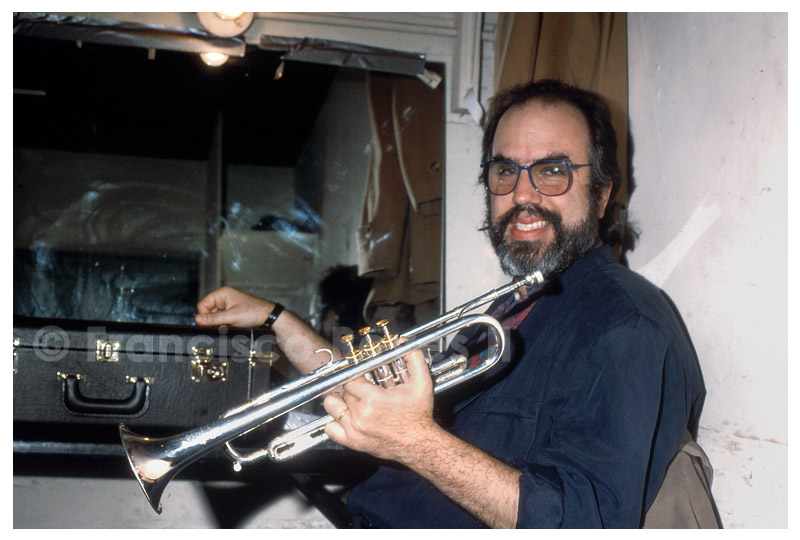
Trumpeter Randy Brecker backstage - 1991, Village Gate, NYC
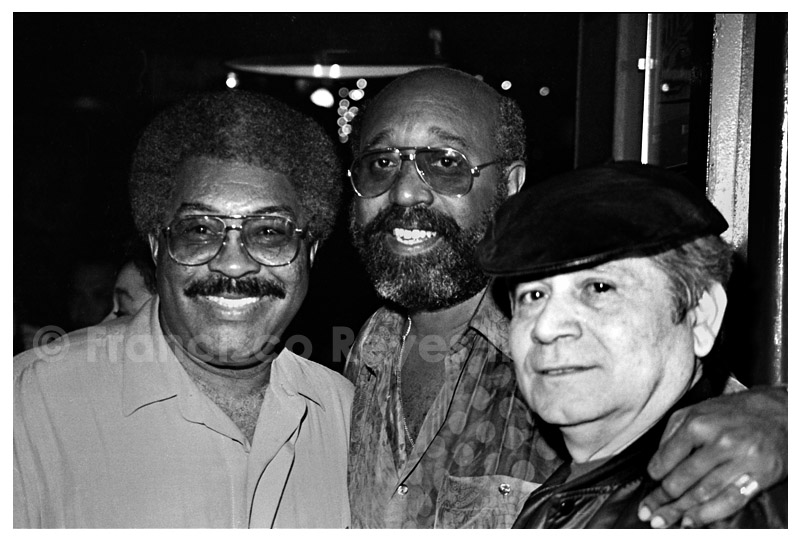
Rafael Ithier (left), Ralph Mercado (center), and Ralph Cartagena (right) by "Top of the Gate" - 1991, Village Gate, NYC
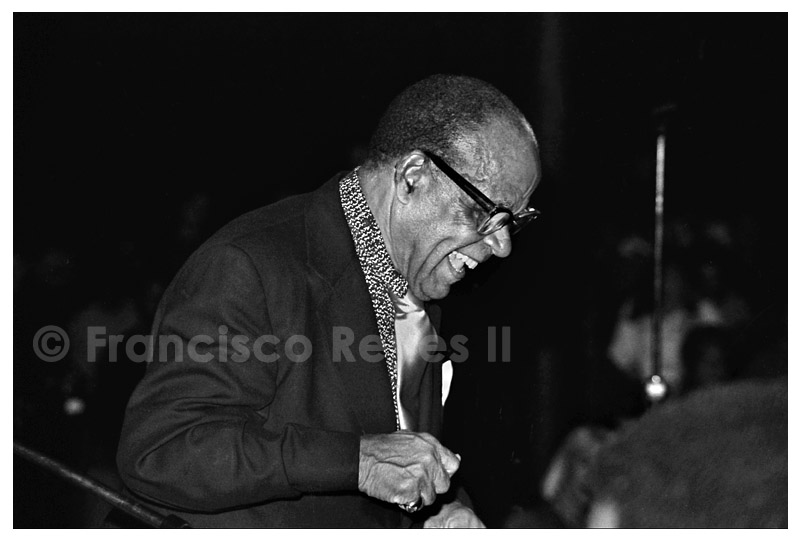
Mario Bauzá conducting his Afro-Cuban Jazz Orchestra - "Afro-Cuban Big Band Style" October 28, 1991, Village Gate, NYC
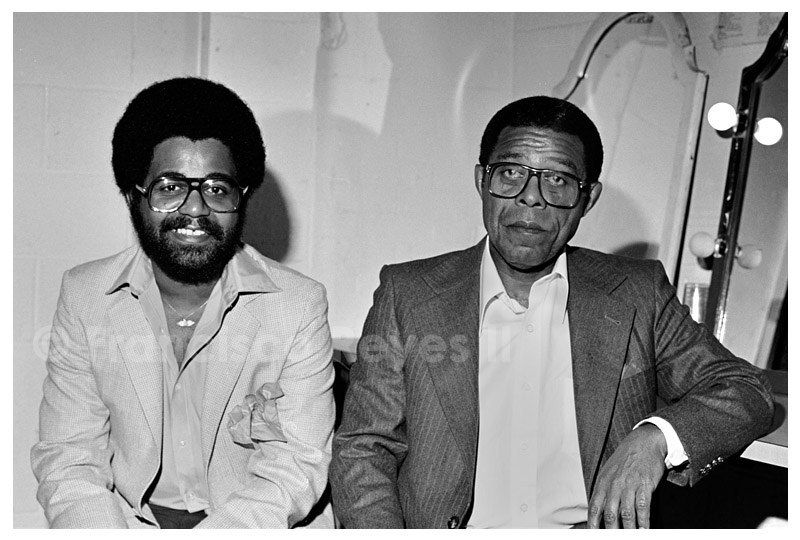
Percussionists Jose Mangual Jr and Sr. backstage - July 1980, Village Gate, NYC
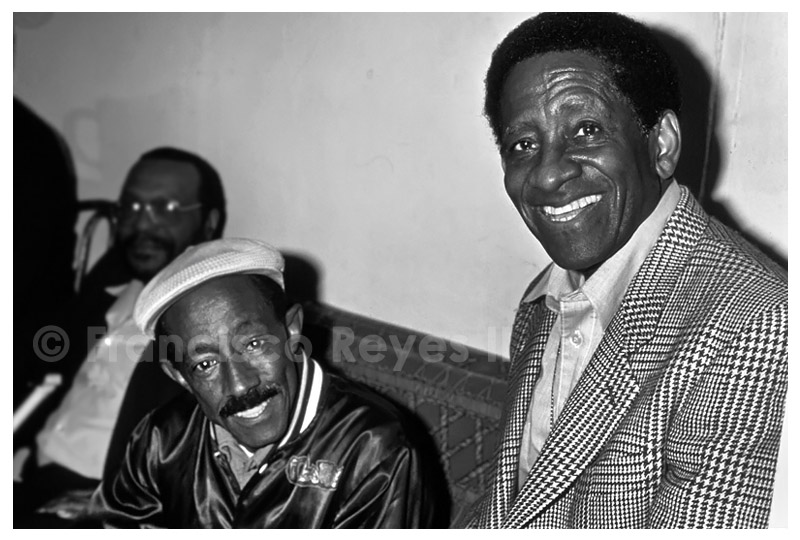
Ramón "Mongo" Santamaría (right) with Carlos "Patato" Valdes (left) backstage - 1989, Village Gate, NYC
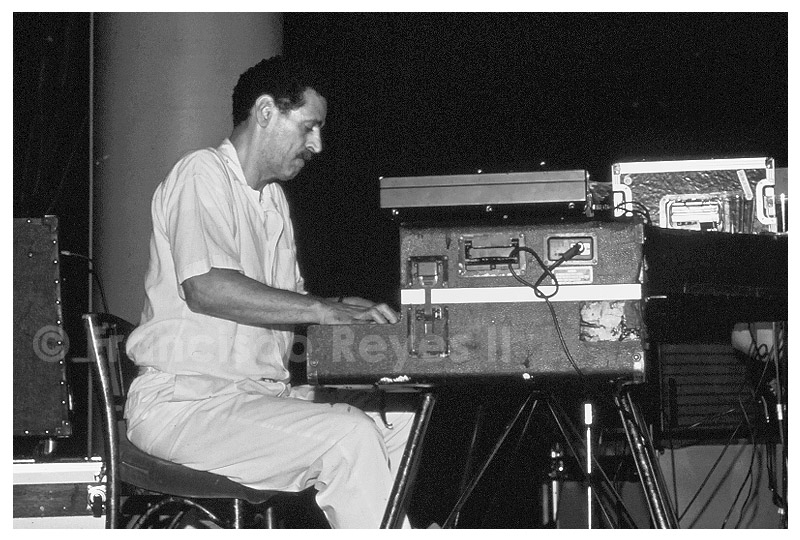
Sonny Bravo on keyboards with the Tito Puente Latin Jazz Ensemble - April 22, 1991, Village Gate, NYC
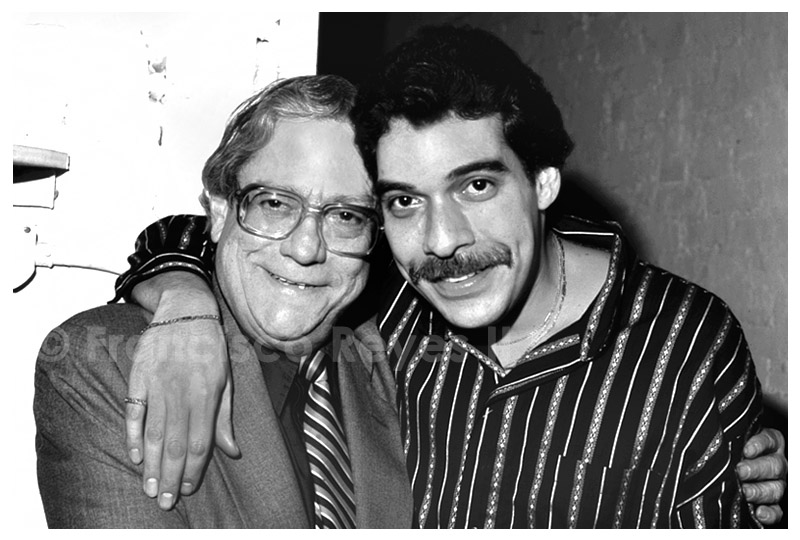
Flutists Jose Fajardo (left) and Dave Valentin backstage - 1991, Village Gate, NYC
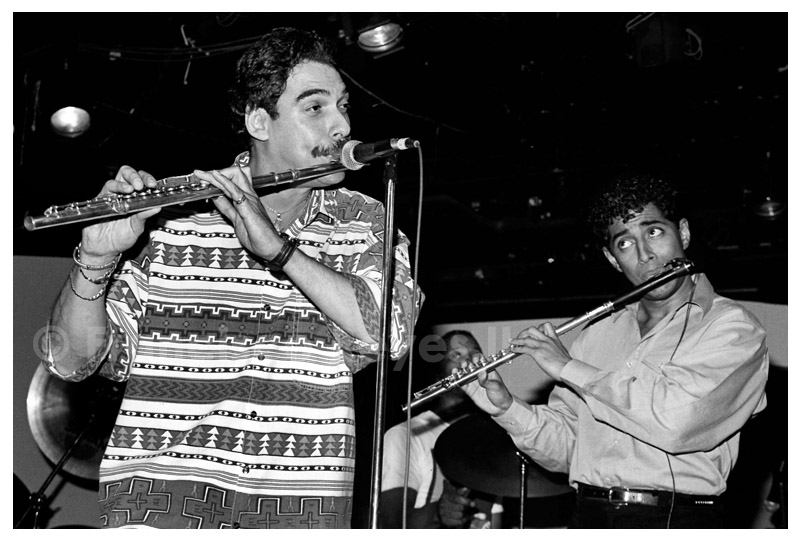
Dave Valentin (left) and Nestor Torres (right) on flutes - "A Night of Flutes" October 21, 1991, Village Gate, NYC
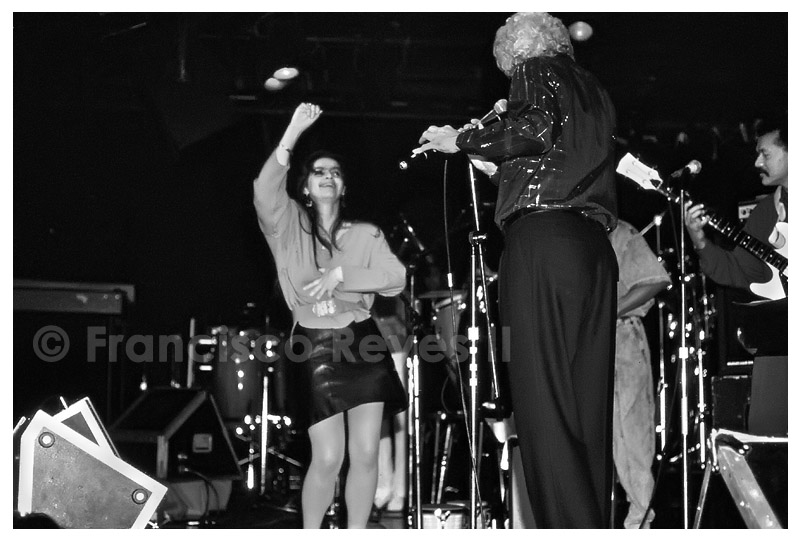
Johnny Pacheco on flute enchants a dancer with the Fania All-Star Six - "An Opening Night To Remember," February 20, 1989, Village Gate, NYC
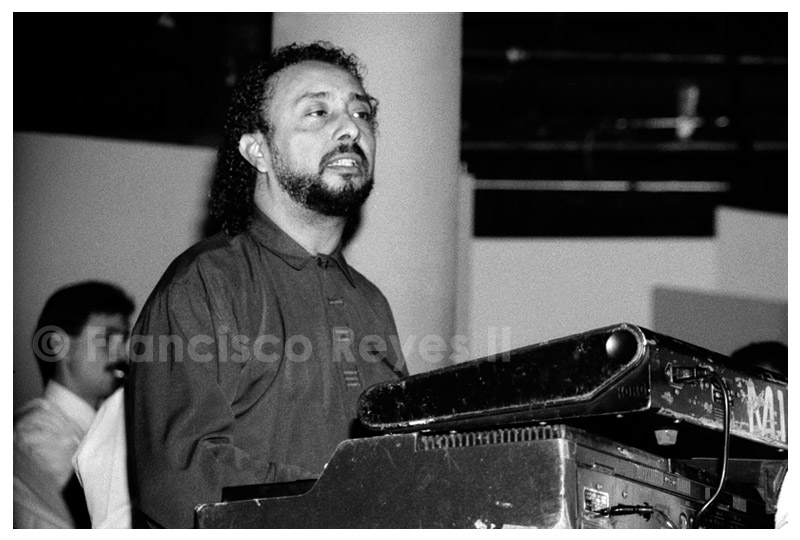
Papo Lucca on piano with the Fania All-Star Six - "An Opening Night To Remember," February 20, 1989, Village Gate, NYC
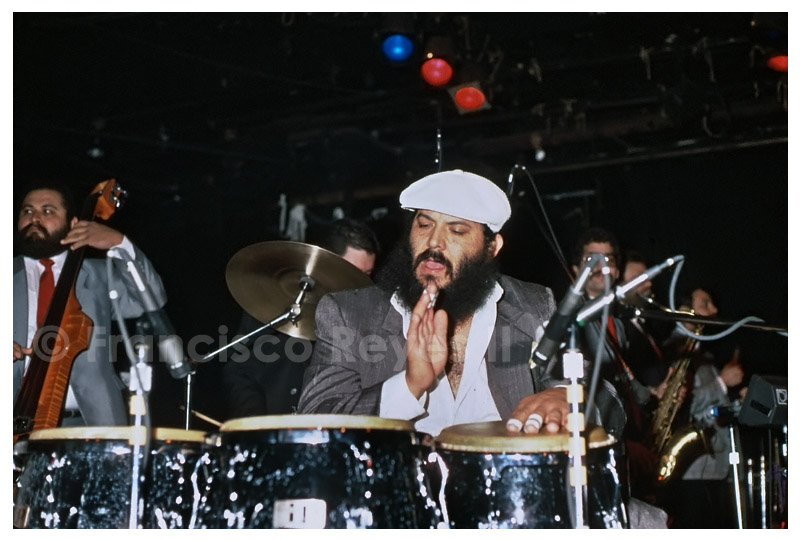
Poncho Sanchez, congas and band leader - 1989, Village Gate, NYC
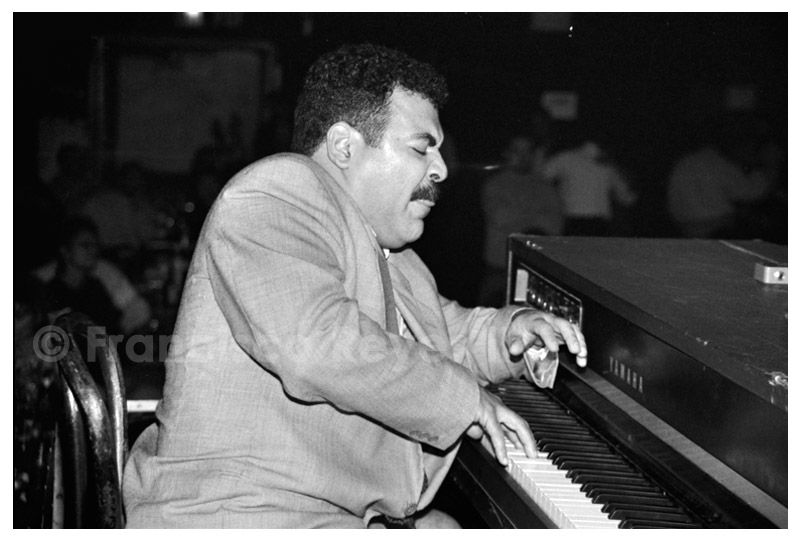
Hilton Ruiz on piano, guest jazz soloist with the Eddie Palmieri & Friends - November 25, 1991, Village Gate, NYC
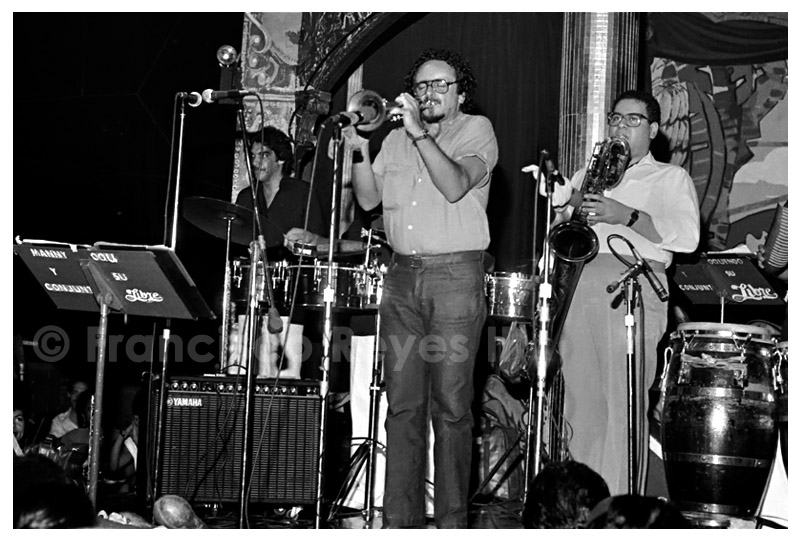
Claudio Roditti featured on trumpet with Conjunto Libre - circa 1980, Village Gate, NYC
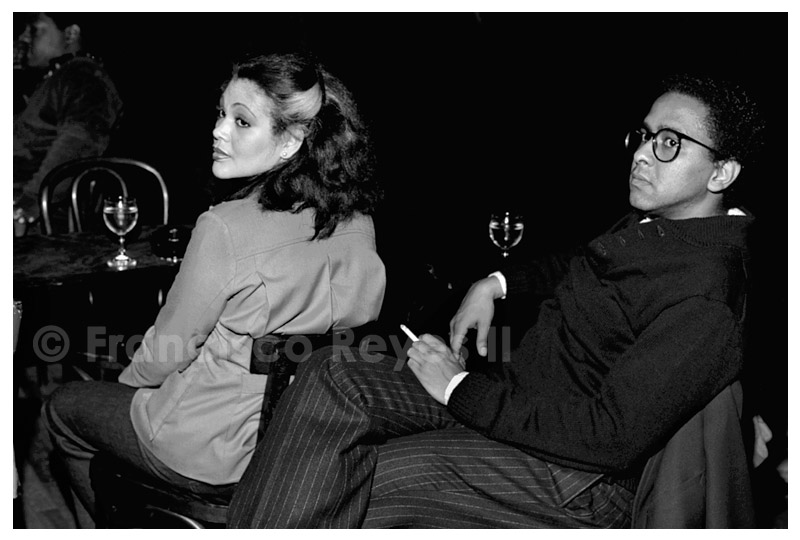
Music writer Tony Sabournin (right)
- "A Latin-Jazz Spectacular" March 6, 1989, Village Gate, NYC
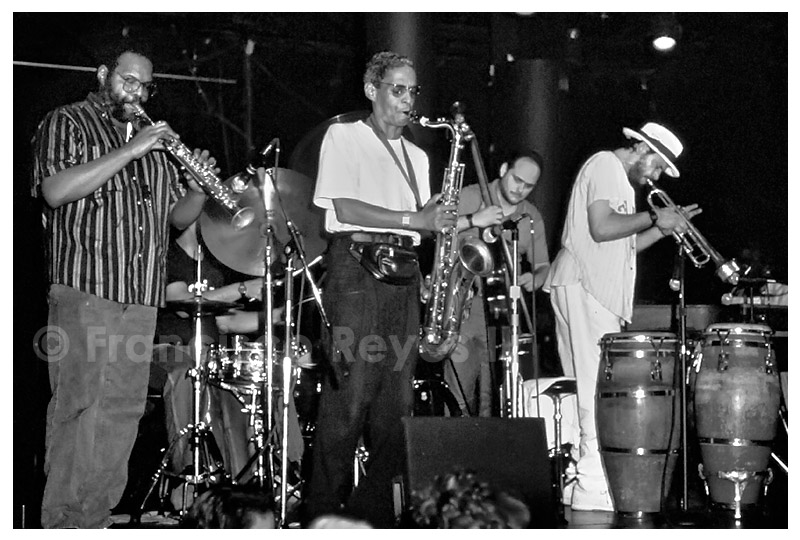
Joe Ford (left), soprano sax, Carter Jefferson (center), tenor sax, Andy Gonzalez (bass), and Jerry Gonzalez (trumpet) with Fort Apache Band - September 16, 1991, Village Gate, NYC
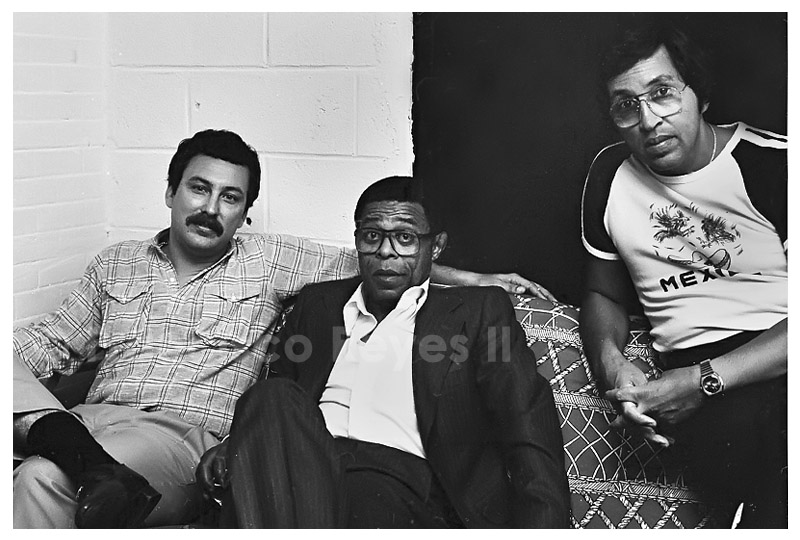
Radio show host Roger Dawson (left), percussionist Jose Mangual Sr. (center), and promoter Richie Bonilla - 1980, Village Gate, NYC
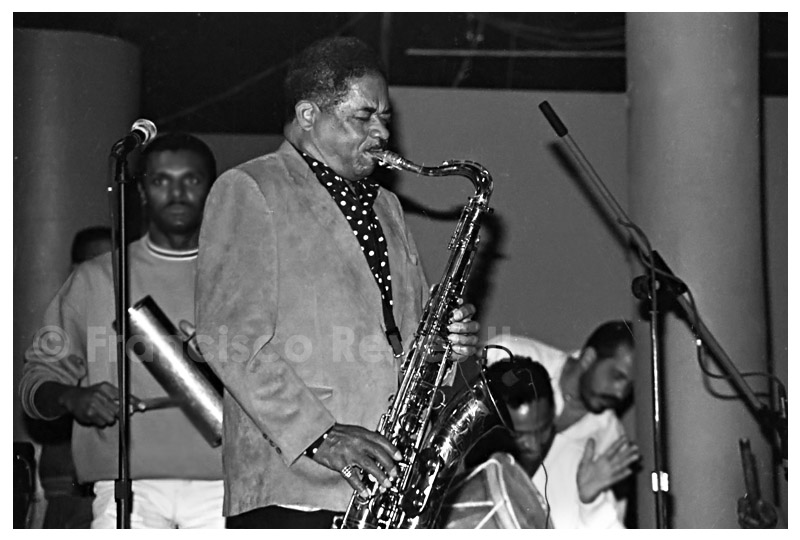
Frank Wess on tenor sax with Jose Alberto and His Group - November 11, 1991, Village Gate, NYC
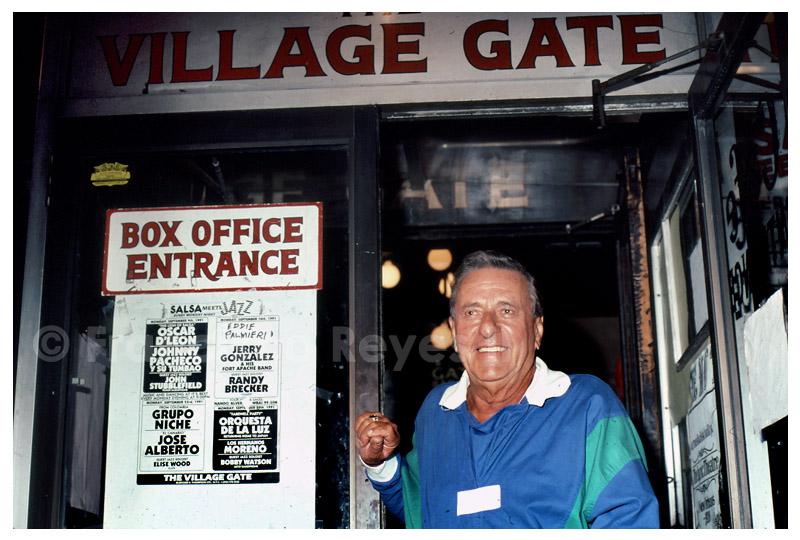
Jack Hooke, series co-founder and promoter - 1991, Village Gate, NYC
|
||

|
||
 |
 |
 |
 |
 |
 |
 |
 |
|
 |
||
Clip #1. Clip #2. 
|
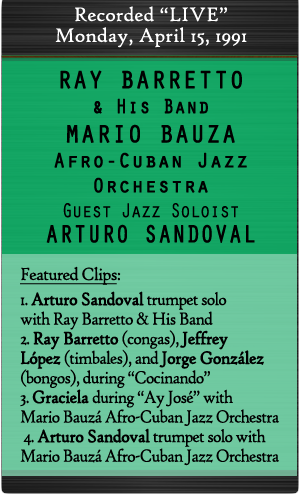
Clip #1. Clip #2. Clip #3. Clip #4. |
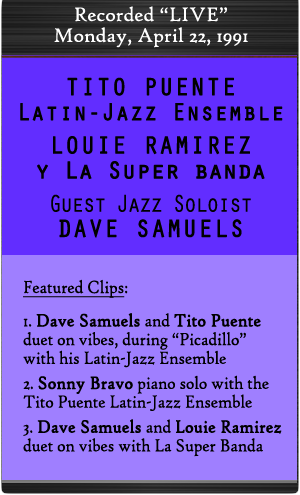
Clip #1. Clip #2. Clip #3. |
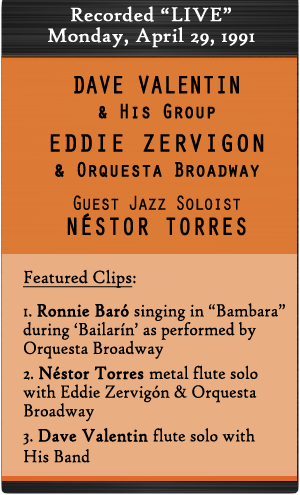
Clip #1. Clip #2. Clip #3. |
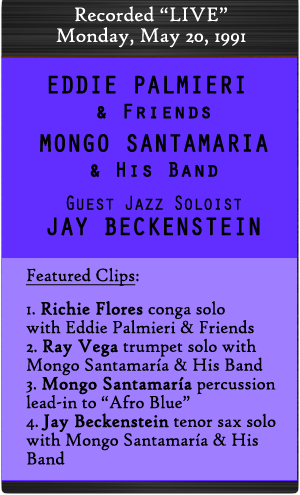
Clip #1. Clip #2. Clip #3. Clip #4. |
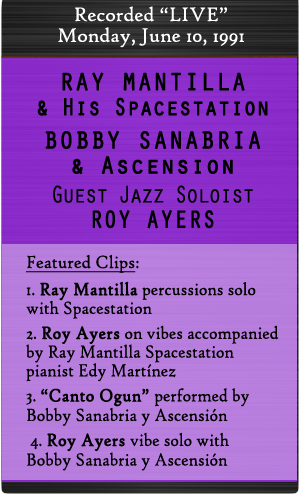
Clip #1. Clip #2. Clip #3. Clip #4. |
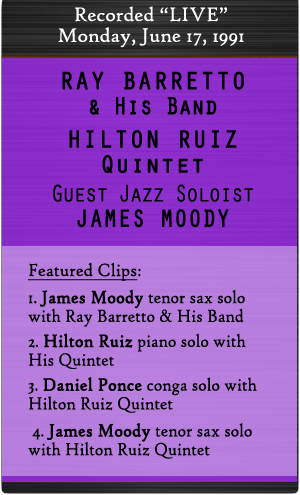
Clip #1. Clip #2. Clip #3. Clip #4. 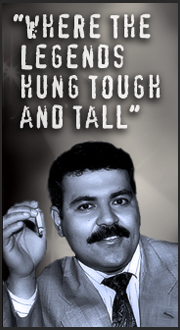
|
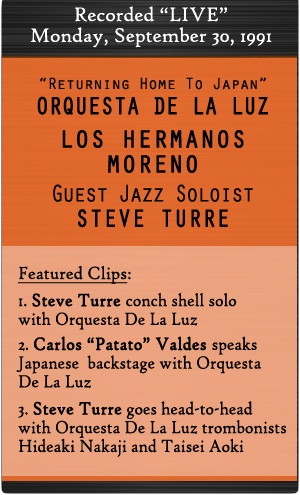
Clip #1. Clip #2. Clip #3.  |
Clip #1. 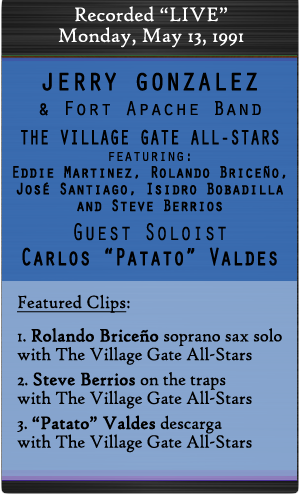
Clip #1. Clip #2. Clip #3. |

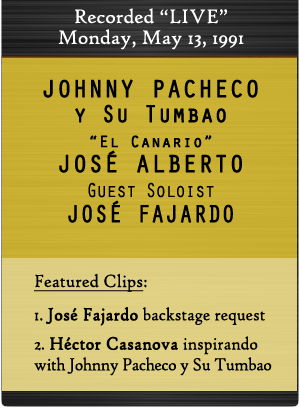
The Mambóso Nuyotópia Archives: "Salsa Meets Jazz" Project is an internet-based tribute to the famous long-running series "Salsa Meets Jazz at The Village Gate." The recordings and photographs included in this module are from the archives of independent visual-artist Francisco Molina Reyes II.
Most of the audio excerpts from the recorded performances were edited together with relevant interviews and such conducted during the course of the 1991 season, or used in conjunction with pre-recorded reports and updates. Earlier edited versions were featured as segments of a music radio program titled "Mambóso Nuyotópia" that aired weekly over WHRW-FM in Binghamton, NY -- a non-commercial college broadcast radio station. The original air tapes were lost; however, most of the raw audio-cassette field tapes were salvaged. Sincerest thanks and appreciation goes out to series co-founder and promoter the late Jack Hooke. Very special thanks and remembrance also goes out to the illustrious Ralph Mercado, and to promoter Harriet Wasser. All three lent their support and influence whenever possible in events that permitted this small project to become what can only be described as a unique record of a New York City musical legacy. Mambóso Nuyotópia Archives also thanks Carl Seltzer and Charles Blanket -- the principal sound engineers at the Village Gate who assisted us with the recording challenges of this project. Undaunting appreciation goes out to all of the talented artists living and deceased whose creative performances, images, and insights comprise the substance of this homage to creativity and to the language that binds us all: MUSIC. |
||

|
||

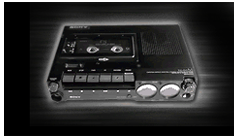
Given the resources available at the time, to achieve the "live-music, NYC club experience," a direct patch from the house mixer board was fed to one channel of a SONY TCD-5M Audio Cassette Recorder, and the other channel was fed by a Sennheiser PA microphone dangling from the sound booth, just above the rear of the main audience area, directly across from the stage. Maxell metal-alloy tape was used for the recordings which probably accounts for their lack of degradation after sixteen years - the time elapsed before their conversion - and after thirty years, the most recent remix of the excerpts and additions. The results of the "blend" varied from disastrous to exciting with or without post. The clips featured here represent those instances when technology and artistic expression came together to form what I regard to be those vindicating moments about this project. For the purposes of this archive, the excerpts were remixed using Audacity (an open-source audio editing application) and then exported to .mp3 & .ogg format. The Village Gate series was a defining period in the history of Latin Music in New York City; a period, in my opinion, comparable to that of the Palladium Era. My hope is that this "online" tribute will become a permanent archive or part of a larger collection celebrating Afro-Cuban rhythms, Jazz music, the Puerto Rican / Nuyorican community in New York, and Latino Music as a whole. |
||

| top of page | |
||

©MMXXVI Francisco Molina Reyes II, All Rights Reserved. Website Concept & Design by fareyes2Visuals (OR)
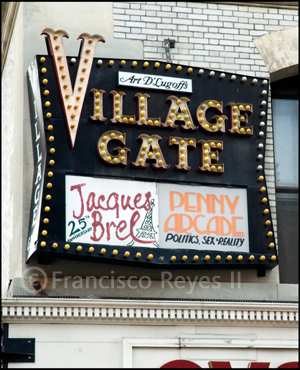 The idea of developing the "Salsa Meets Jazz At The Village Gate: A Tribute To The Original Series" online module took shape, back in 2006. There was a renewed interests by musicians and promoters buzzing about as to the series' evolution and its reboot viability. In 2008, Art D'Lugoff, himself, would attempt a return of the series to its former site, only to see it abandoned after maybe three or four shows.
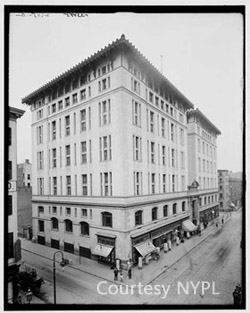 Almost instantly, The Gate became an important gathering point for blossoming "underground cultural movements" and the NYC "avant-garde" scene.
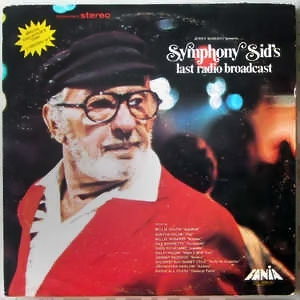 That collaboration produced "Monday Nights at the Gate." Every week, the trio presented straight Latin music performances that benefitted from Torin's then popular evening radio show. The Village Gate became a hotspot for an idiom sweeping the music scene: the descarga. The improvizational form brought together old and new school Cubans, Puerto Ricans and Nuyoricans who “were essentially a product of the jazz-oriented tastes of the first generation of New York-born musicians.”
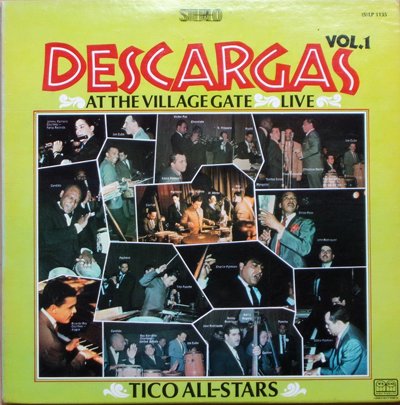 In late 1965, a historic jam session at The Village Gate brought together another ensemble — the Tico All-Stars — that included a number of now legendary musicians like Israel Cachao Lopez, Ray Barretto, Johnny Pacheco, Cándido Camero, Joe Cuba, Jose "Cheo" Feliciano, and the Palmieri brothers (Charlie and Eddie). That meeting produced “one of the most famous Latin jam-session albums ever…” — 'Descargas Live at the Village Gate, Vol. 1, Tico All-Stars (Tico Records, 1965)'. Vol. 2 and Vol. 3 soon followed. The new-school jazz-infused “loosened” tipico sound of the afrocuban-derived descarga form became the next big wave to ride for the Village Gate.
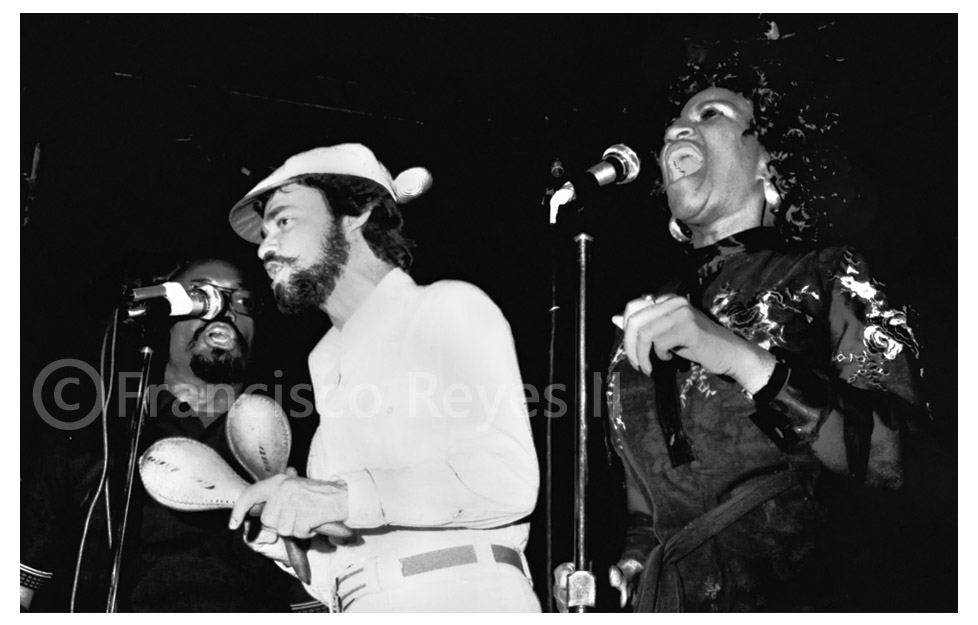 "Salsa Meets Jazz at the Village Gate', still occupying its familiar Monday night slot, continued to be a premier event within New York City’s live-music club scene. World-renowned stars like Celia Cruz, Tito Puente, Mongo Santamaría, Eddie Palmieri, Machito, and dozens more were often paired up with prominent jazz musicians like Dizzy Gillespie, Dexter Gordon, McCoy Tyner and others.
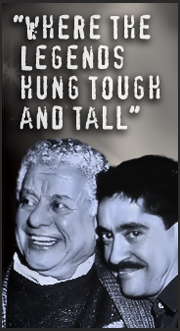
 The building where the Legends of Latin and Jazz hung tough and tall is now a CVS Pharmacy and mini-mall. However, the area that was the main stage of D’Lugoff’s Village Gate (the lower level) has undergone extensive reconstruction. The historic Village Gate may be gone forever, but, the newly renovated location is currently the home of (Le) Poisson Rouge – a multimedia art cabaret founded by musicians sharing a similar vision of creative expression beyond the norm.
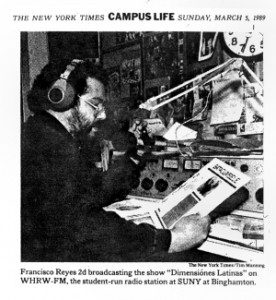 Francisco Molina Reyes II is a first-generation Nuyorican, born in the Bronx and raised in El Barrio, NYC.
For over twenty years, Francisco spent much of his time photographing Latin music artists and performances at concert halls and clubs throughout the five NY boros and in neighboring New Jersey. While attending Binghamton University, he became involved with the college radio station (WHRW-FM), hosting weekly Latin, Jazz, R&B and Folk music shows. He eventually became head of the Latin Music department and produced numerous radio programs through the station. The Mambóso Nuyotópia presents, "Salsa Meets Jazz" weekly radio show was one such project he developed. The surviving materials from those broadcasts are presented in this web module.
Francisco Molina Reyes II is a first-generation Nuyorican, born in the Bronx and raised in El Barrio, NYC.
For over twenty years, Francisco spent much of his time photographing Latin music artists and performances at concert halls and clubs throughout the five NY boros and in neighboring New Jersey. While attending Binghamton University, he became involved with the college radio station (WHRW-FM), hosting weekly Latin, Jazz, R&B and Folk music shows. He eventually became head of the Latin Music department and produced numerous radio programs through the station. The Mambóso Nuyotópia presents, "Salsa Meets Jazz" weekly radio show was one such project he developed. The surviving materials from those broadcasts are presented in this web module.
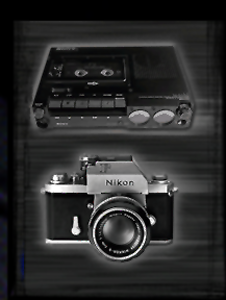 As producer of "MAMBOSO NUYOTOPIA PRESENTS...", my objective was to end up with a "broadcast-quality" recording that would bring the "live-music, NYC club experience" to the Latino and general listenership of the non-commercial, college radio station WHRW-FM in Binghamton, New York. The station's Latin and Afro-Caribbean music department, RADIO PATRIA, was an outlet for a number of my productions as an area broadcast engineer and as an independent media-artist. Special funding for this project was non-existent. So, essentially, production was "low-budget, low-tech, fast, and dirty." Quite frankly, the project would not have happened if it were otherwise.